
Search any big creator’s name, and you’ll find a net worth figure within seconds. Most of those numbers are guesses dressed up as facts. The real story behind Internet Chicks net worth claims is messier than a single headline figure, but it’s far more useful if you want to know what female creators actually take home in 2026.
This guide skips the gossip math. You’ll get real platform payout data, earnings by creator tier, the costs that quietly eat into revenue, and a simple method for estimating any creator’s worth on your own.
Why Most Creator Net Worth Figures Miss the Mark
Net worth sites love big round numbers. The problem is that they almost never show their work, and three basic mistakes show up again and again.
Revenue Isn’t Take-Home Pay
A creator who “made $2 million” on a platform didn’t pocket $2 million. Platform fees come out first. Then managers, agencies, editors, assistants, and taxes take their share. By the time money hits a personal savings account, it’s often half the headline figure or less.
Income Isn’t Net Worth
Net worth is simple: what you own minus what you owe. One huge year doesn’t equal lasting wealth. A creator who earns $500,000 and spends $480,000 on rent, travel, a team, and gear has built very little. Another who earns $150,000 and invests most of it may end the year richer on paper.
Public Data Is Thin
Creators don’t publish tax returns. Platforms rarely reveal what any single account earns. So estimate sites multiply follower counts by an assumed rate and call it a day. Those formulas can miss by a factor of five in either direction.
Before following any of them, read our honest answer to is Internet Chicks safe.
The Real Earnings Ladder for Female Creators in 2026
Creator income works like a steep pyramid. A small group at the top pulls in most of the money while the majority earn part-time income at best.
The table below shows typical sponsored post rates by follower tier. These are Instagram-baseline figures for an average-demand niche, so fashion, lifestyle, and beauty creators land near the middle of each range.
| Creator Tier | Followers | Typical Rate per Sponsored Post |
| Nano | 1K–10K | $50–$250 |
| Micro | 10K–100K | $250–$1,500 |
| Mid-Tier | 100K–500K | $1,500–$5,000 |
| Macro | 500K+ | $5,000–$12,000 |
| Mega | 1M+ | $10,000–$100,000+ |
Elev8or’s June 2026 rate report sets these baseline bands for nano, micro, mid-tier, and macro creators on Instagram, while mega-influencers with over 1 million followers can command anywhere from $10,000 to well past $100,000 per post. For context, Collabstr puts the average sponsored post rate across its marketplace at $215 in 2026, and fashion creators average $185 per post.
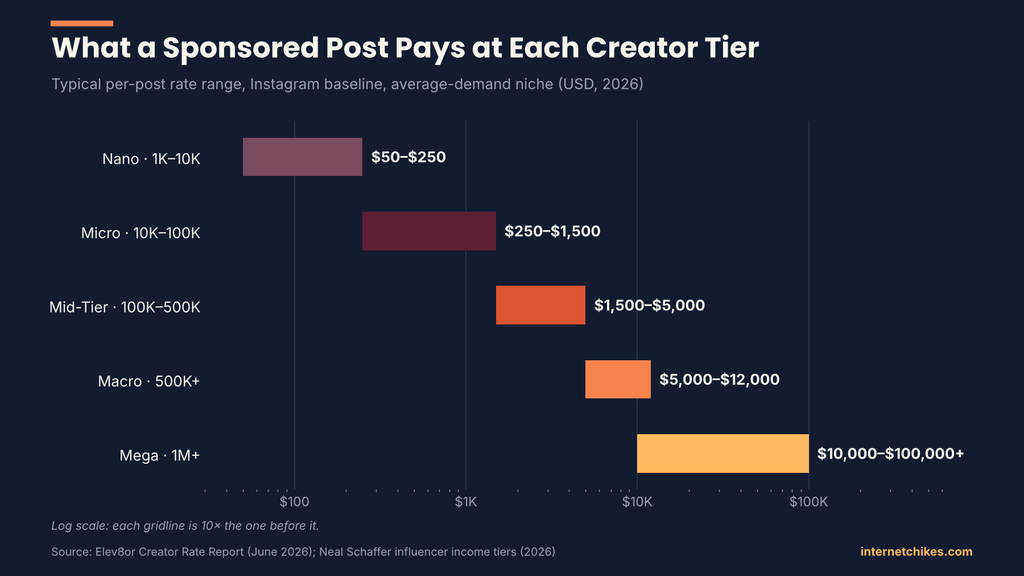
Image 1: Sponsored post rates by creator tier (alt text: Chart of sponsored post rates by creator tier in 2026, from $50 for nano creators to $100,000+ for mega creators)
Nano and Micro Creators
This is where most female creators sit. A micro creator who lands two brand deals a month at $800 each earns about $19,000 a year from sponsorships. That’s real money, but it rarely replaces a full-time salary on its own.
Mid-Tier Creators
Mid-tier creators usually cross into full-time territory. They stack brand deals with affiliate income, platform payouts, and sometimes paid subscriptions. Many hire their first editor or manager at this stage.
The Top 1%
The top tier earns wildly more than everyone else. Subscription platforms show this gap most clearly. On OnlyFans, the average creator earned about $1,300 a year in 2023, while the top 1% averaged roughly $49,000 and the top 10% around $11,000. At the very peak, 5,076 creators had earned at least $1 million each by August 2025. That’s a tiny slice of a platform with millions of accounts.
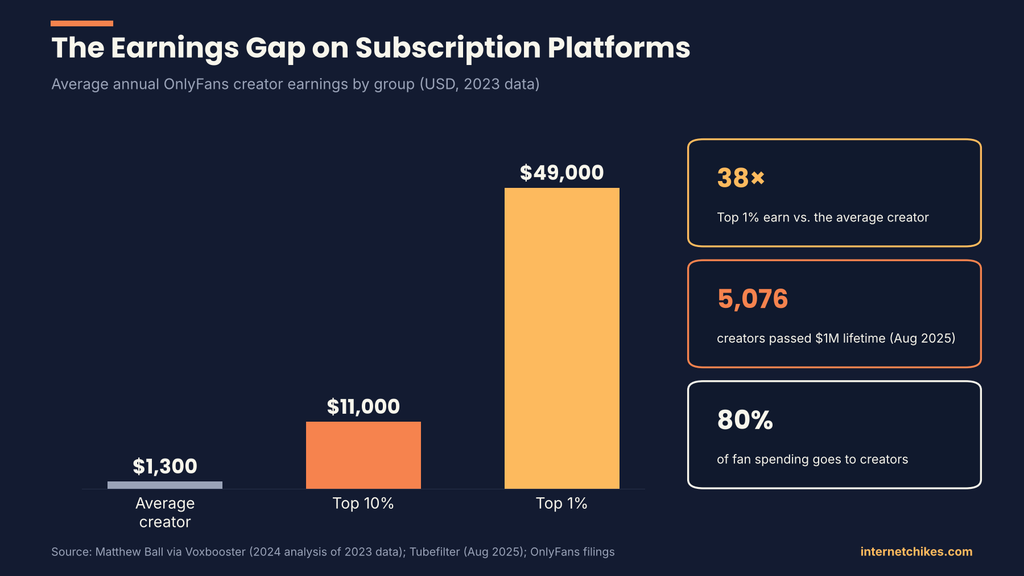
Image 2: The subscription platform earnings gap (alt text: Bar chart showing average OnlyFans creator earnings of $1,300 versus $11,000 for the top 10% and $49,000 for the top 1%)
Where Top Female Creators’ Money Really Comes From
No serious creator relies on one income stream. Here’s how the typical revenue stack breaks down in 2026.
Brand Partnerships
Sponsored posts remain the biggest line for most TikTok and Instagram creators. Rates climb with engagement and niche, not just follower count. A beauty creator with 80,000 loyal followers can out-earn a 300,000-follower account with passive viewers.
Platform Payouts
Direct platform pay is smaller than most people assume. TikTok’s Creator Rewards Program pays roughly $0.40 to $1.00 per 1,000 qualified views, so one million views typically brings in $400 to $1,000. Instagram is stingier still. It has no per-view payout, and its current Bonuses program is invite-only with unpublished rates.
Fan Subscriptions
Subscriptions are where top earners build the steadiest income. OnlyFans keeps 20% of fan spending and pays creators the remaining 80%, and it paid out $6.3 billion to creators in the year ending November 30, 2025. Instagram also offers paid subscriptions, though the feature is open to eligible creators with at least 10,000 followers.
Affiliate Links, Products and Licensing
Affiliate commissions, clothing lines, beauty products, and content licensing round out the stack. Owned products carry the best margins because no platform takes a cut. Many top creators earn more from their own brand than from sponsored posts.
Net worth comes down to the income streams covered in how Internet Chicks make money.
How Niche and Platform Change the Math
Two creators with the same follower count can earn very different amounts. Niche and platform choice often matter as much as audience size.
Niche Premiums
Brands pay more when an audience is likely to buy something expensive. Elev8or’s 2026 rate report gives tech and SaaS creators a 2.5x demand index and finance creators 2.2x, compared with a lifestyle baseline. A micro tech creator can charge $625 to $3,750 per post, while a micro lifestyle creator sits closer to $250 to $1,500. Fashion and beauty creators usually land near the middle, since those brands spend heavily but face plenty of competition.
Platform Multipliers
The same deal is priced differently on each app. Elev8or’s data puts YouTube at about 1.70x the Instagram baseline per sponsored post, while TikTok and Snapchat rank lowest. That’s why many top female creators treat TikTok as a growth engine and save their premium sponsorships for YouTube or Instagram.
Engagement Rate
Follower count sets the starting point, but engagement decides the final price. Brands now check saves, shares, and comments before signing. A smaller account with an active community often wins the deal over a bigger account with a quiet one, and it can usually charge more per follower too.
Earnings vary a lot by platform, which we compare in our Internet Chicks alternatives guide.
What Comes Off the Top Before Wealth Builds
Gross earnings shrink fast once real costs hit. Here’s where the money goes.
| Cost | Typical Share |
| Platform fees | 20% on subscription platforms like OnlyFans |
| Talent manager | Commonly 10%–20% of deals they bring in |
| Agencies | Some take a much larger cut, occasionally half |
| US self-employment tax | 15.3% before federal and state income tax |
| Team and production | Editors, photographers, gear, travel, software |
Taxes Hit Harder Than People Think
US creators are self-employed, so they pay both halves of Social Security and Medicare. That’s the 15.3% self-employment tax, and federal and state income taxes still come on top. A creator grossing $300,000 can easily owe a third of it or more.
Platform Rules Change Without Warning
Income can drop overnight when a platform rewrites its rules. TikTok replaced its original Creator Fund with the Creator Rewards Program in March 2024, which changed payouts for millions of accounts. Creators who depended on one program had to rebuild fast. Smart earners treat any single platform payment as a bonus, not a salary.
How to Estimate a Creator’s Real Worth in 5 Steps
You don’t need insider access to make a sensible estimate. Use this quick method.
- Count real engagement. Check average likes and comments on recent posts. Engagement predicts deal rates better than raw followers.
- Spot paid partnerships. Look for “Paid partnership” tags, #ad labels, and affiliate codes. Multiply visible deals by the tier rates above.
- Add platform payouts. Estimate monthly views on long-form TikTok videos and apply the $0.40–$1.00 per 1,000-view range.
- Factor in subscriptions and products. Check for subscription links, merch, or a product line. These often outweigh sponsored posts at the top end.
- Subtract 40%–55%. Fees, taxes, staff, and production costs typically consume this much of gross revenue.
What’s left is annual take-home pay. Net worth only grows if that money gets saved or invested, so treat any final figure as a rough range rather than a fact.
Frequently Asked Questions
These are the questions readers ask most about female creator earnings.
Who is the richest female online creator?
There’s no verified public ranking. Creators don’t disclose finances, and most net worth lists rely on estimates. Treat any single “richest” claim with caution unless it comes from audited reporting.
How much does a creator with 1 million followers earn?
It varies hugely by niche and engagement. A sponsored post at this level typically starts around $10,000. Add affiliate sales, subscriptions, and platform payouts, and annual revenue can range from low six figures to several million.
Do most female creators earn a full-time living?
No. Most creators sit in the nano and micro tiers and earn side income. Full-time income usually starts somewhere in the mid-tier range, and it depends on stacking several revenue streams.
Which niches pay female creators the most?
Tech, SaaS, and finance pay the highest sponsored post rates because their audiences buy high-value products. Fashion, beauty, and lifestyle pay less per post but offer far more brand deals.
Is a creator’s net worth the same as yearly earnings?
No. Yearly earnings are gross revenue before costs. Net worth is total assets minus debts. A creator can earn a lot and still have a modest net worth if spending matches income.
The Bottom Line
Headline net worth figures make for great clicks, but they rarely hold up. Real creator wealth comes from stacked income streams, tight cost control, and saving during the good years. If you want an honest picture, start with engagement, count the visible deals, and subtract the costs nobody talks about.